 SAMOURAÏ COOP
From Startup Nation to Coop Nation: Why My Scepticism About Government Tech May Be Fading (and How I’m Taking Part).
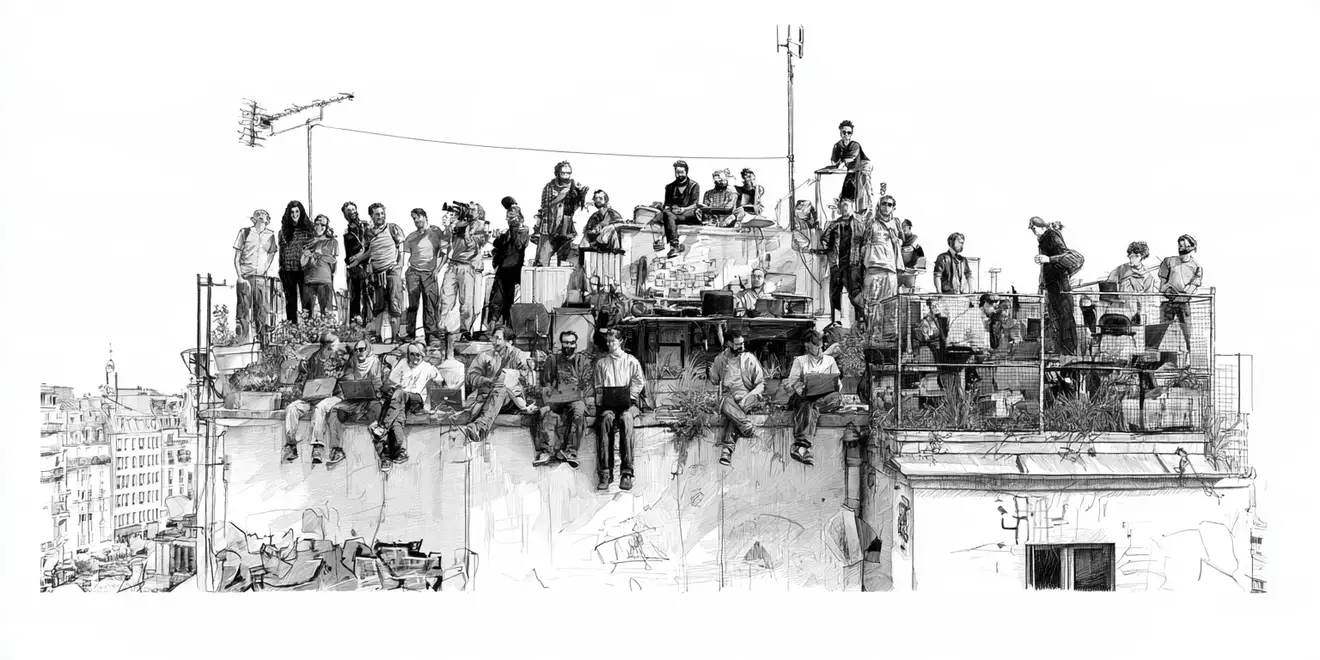
It is particularly interesting to watch new, structuring dynamics emerge across Europe’s tech and open-source ecosystems.
For more than 15 years, I have maintained an open—and often justified—scepticism towards “tech” projects coming from institutions or the state. Yet today, I believe it is crucial to document, and shout from the rooftops, that significant and genuinely encouraging changes are underway.
After more than 10 years working within and for open source, defending the idea that another kind of tech is not only possible but necessary and more resilient, I have seen a new wave of actors build a deeply relevant momentum over the past few months.
These are the weak and strong signals showing that the landscape is changing.
1. DINUM: The technical welfare state is waking up
I have always tended to be highly critical of state-led tech projects, and honestly, I always will be. This is probably due to a few past traumas (hello, the Tchap tender—and a fair number of major failures that have become almost historic for anyone who followed this kind of news).
But we have to admit that DINUM—the French Interministerial Directorate for Digital Affairs—has been doing things well for perhaps a year or two. It has assembled a team of brilliant, sharp and productive engineers. Instead of reinventing the wheel, they are building foundations on proven open-source standards and laying the groundwork for a genuine ecosystem that is ready to be amplified, joined and distributed. They provide tools, make things easier and plant the seeds from which an ecosystem can emerge.
We can only admit that they have put a chilli pepper up their ass, as we like to say at Samouraï Coop. The work they have done deserves respect.
2. LaSuite.coop: Tech is not enough—we need tech + culture + governance
Technology without a strong culture and a solid social architecture does not last in a hostile, shifting environment exposed to stress tests—technical, financial, geopolitical, internal conflicts and so on.
This is where the connection with the cooperative movement (SCIC/SCOP) becomes interesting, and frankly makes me happy, even if it is still in its infancy. The emergence of LaSuite.coop (rejoindre.lasuite.coop) is laying the foundations for a long-term approach: defending the common good and users’ interests not merely as an anecdotal or activist gesture, but structurally and legally. The “product” becomes a common good: open, and something in whose governance the different parties—users, developers, publishers and others—can choose to participate.
I remember being mocked when I defended the idea of open-source software backed by a cooperative model, because obviously that is not how you sell a company to NVIDIA for 12 billion (hello Hugging Face, and congrats). A few years ago, I used to have fun replying to VCs interested in Samouraï Coop: “Oh no, thanks, we’re not looking to raise funds. We’re not part of the Startup Nation—we’re inventing the Coop Nation.”
This underlying movement is interesting, and it sends a strong signal. But let us be clear-eyed: it will need to grow to a scale that matches the challenges, because the numbers are unforgiving. We need outstanding success stories: software developed by SCOPs or SCICs that is profitable and reaches both scale and the general public. That is also how engineers, developers, or simply tomorrow’s children will become excited by the idea of working for cooperatives. Right now, let us be honest, joining a cooperative is mainly an act by “politicised” people seeking meaning. Personally, I think we need to reach the point as soon as possible where the software, products or services are so good that nobody cares whether they are open source or cooperative—and that this simply becomes the icing on the cake. I want the next generations of developers to light up at the idea of joining cooperative companies rather than Google, Anthropic or OpenAI, because a company excites them through its work, salaries and products.
3. The end of the “bullshitters’” reign and the return of French—and European—hacker, builder and engineering culture
For 10 years, algorithms have promoted every kind of “business” profile, pushing young engineers to see success through models and personalities that sent shivers down my spine. In this climate of brainwashing—where success boils down to raising N million with American VCs—how can we make other exciting paths emerge, paths that serve the common good?
This is why the work of Mehdi, Steve and JB through their podcast À la French is so vital. In just a few months, they have shown that a gaping void had been left in France, and that many of us want to do ambitious things that have meaning—and style.
It may seem anecdotal to you, but I genuinely think that in a few years we will understand the impact of initiatives like this.

4. European funding: Beware of “open-source / resilience / sovereignty washing”
Today, we are paying for the past 20 years of neglect in French and European investment, along with a cybersecurity culture that has been nonexistent and caricatured—the recent waves of critical attacks on French infrastructure are a striking demonstration. It is “too late” on this specific front, but we can build the future. We need to put a chilli pepper up our ass and build another culture, create excitement and offer a vision—sustainably, not merely for the duration of one political term.
New sources of European funding intended to help open-source actors emerge are beginning to appear. My usual scepticism towards institutional inertia leads me to several warnings:
- Watch where the money goes: We must ensure that it truly helps sustainable actors emerge instead of fattening up the same IT consultancies and intermediaries, whose capital is often held by non-European funds. We need to avoid toxic middlemen—the kind with 20 full-time employees dedicated to gaming tenders, who then hire 10 juniors to build the software once they have won the contract.
- Invent a culture of radical transparency: No more years of work inside black boxes, like the LUNA project for the French National Police: a “black box” with an initial budget of €200 million, abandoned in 2014 after swallowing €80 million in public funds without ever being delivered. (Le Figaro article, source #2: NextImpact and the French Court of Auditors). We need real-time tools to track development and funding.
- Decentralise development: Think in terms of a living, organic, plural and proactive “ecosystem,” instead of a top-down architecture administered by people who do not understand the field, yet allocate budgets, set visions and make decisions whose purposes they do not grasp. France has competent—even exceptionally competent—people. Let us hire them on good salaries, give them room to manoeuvre and the freedom to act, so they can build a genuinely long-term vision in good conditions.
And where are the people responsible, by the way? Do we know which decision tree led to these successive industrial and strategic disasters over the past 15 or 20 years? Get me the CEO of this Startup Nation. Let us hold an online general assembly and kick them out, shall we? That is not how it works? Yet ultimately, we financed these solutions through our taxes… Can we withdraw as investors? Sorry, I am getting carried away.
The time for the Coop Nation has come
To be provocative, I am asking myself three questions:
- Can we invent a nation where diverse teams contribute to the commons with technical rigour, but without the inertia of administrations?
- Can we fund this transparently, sustainably and fairly enough to attract the best people?
- Can we make all of this exciting, and be proud to work for the commons?
The stars are aligning to show that the cooperative model must emerge, explore and move towards new trajectories—radical or otherwise—but trajectories solid enough to withstand a hostile, shifting and complex environment.
Paradoxically, while giants such as NVIDIA are concentrating historic levels of computing power and hardware dominance—an illustration of the hyper-centralisation of resources—it is acquiring a platform dedicated to open source and AI, Hugging Face. This demonstrates once again that the power of a community should not be underestimated, because it is becoming a strategic issue. A thought experiment: If Hugging Face had been a cooperative, and if the millions of developers who use it—and therefore create the value now estimated at 12 billion—had been members of the platform, perhaps through a simple token distributed in proportion to their contributions, this “capital investment” could potentially have been approved, or rejected, by a general assembly, with value redistributed across the active community. Of course, NVIDIA wants “power” over the platform and would almost certainly not have accepted such a governance model. Still, the hypothesis points towards avenues worth exploring for the future.
Europe and France must respond through decentralisation and transparency—not by throwing around “blockchain” keywords to attract funders and trigger FOMO. We urgently need to take the time to do this well, but also to think “radically,” because open source is going to win. That is only a matter of time. The real question is: how do we want our environment—digital or otherwise—to be governed, decided upon and administered in the future?
My fears: The schizophrenic analysis of a SCOP “boss”
In my work, my analysis has to be “schizophrenic.” I have a visceral desire to believe in this emergence, and I will do everything I can to put my strength, resources and strategies at its service. BUT then there is the “boss*” hat (* an inside joke with my teams): the manager and director of a commercial company. Being a SCOP does not mean we are hippies selling pebbles on a beach. We are a business, and I have to ensure economic stability, carry and own a sustainable vision, and provide a secure environment for my teams. A lovely challenge, you might say. So I have to analyse risk constantly and invest our bandwidth, energy and budgets through a controlled vision that has been assessed and approved by my fellow members.
I fully own these reflections and doubts. All the more so because in 10 years I have never had a salesperson or business developer at Samouraï Coop, and our success is due purely and simply to our work… I believe in karma, perhaps a little too much. But so far, by working as we have—on our own initiative, building and contributing without permission or an initial request—we have always been noticed, recognised, called upon and supported. On the basis of this “do-cracy” (power through doing), we are slowly building concrete legitimacy. This is how our teams—tech and media—became “external task forces” on long-term monthly contracts with international companies and ecosystems around the world. Will this approach and culture work for us in France and Europe? At this stage, it is too early to tell.
So yes, of course I am afraid that this momentum will be short-lived or too timid. That it will amount to “washing,” as we have seen before; that the same intermediaries will gorge themselves; that the same mistakes will be repeated; and that none of it will become concrete when the time comes for European institutions or companies to sign contracts and open their wallets.
I also tend to pay very close attention to governance issues. Through our experience with decentralised international organisations, we know that they create coordination complexities and demand a great deal of energy from those involved. Our policy will be clear: focus our efforts on technology. Provide the tools, secure and maintain them, document them, promote them, help the ecosystem grow, experiment and analyse. This is our way of doing politics, in the sense of caring about the future of our societies. Being seen, taking representative roles or debating for hours is not where we add value.
So, in practical terms, what are we doing? The strategy I am pursuing for Samouraï Coop
Since people may ask what I am doing on my side to “move things forward,” beyond analysing and criticising, here is what we are putting in place:
- Active contribution: We now contribute to DINUM’s tools by joining the development of La Suite Numérique: github.com/suitenumerique. And while we are here: developers, join us on Visio’s official Matrix!
- Support: We make our team available to companies, institutions and organisations that want to migrate from proprietary solutions to La Suite, or work on any other technical project aligned with our values.
- Turnkey products: We are preparing products for people with no technical expertise who want to adopt these tools. Our main project is an all-in-one application replacing Discord, Teams, Slack, Notion and calendars with a simple, accessible app for every form of social organisation.
- Cooperative commitment: We have joined LaSuite.coop as members to support its work and fundraising campaign.
- Visibility and meritocracy: I developed Reportz.dev, a tool that shows “Who does what?”, automatically reveals “Who genuinely contributes to the commons?” and surfaces the humans behind the work. The goal is to bring more developers on board, make the work visible, motivate and boost egos—yes, we like being recognised—with a little gamification, while also attracting both private and public funders. Because contributing to tools people actually use is awesome, and we deserve to be paid well for it too.
- Equipping French and European developers: We are beginning work on devtools—tools for engineers and developers—to facilitate, encourage and sustainably support the emergence of new solutions. Greffon.io, a project led by @Omar Sy, will notably make self-hosting easier, but its ambitions go much further. Other devtools related to AI and open source are also being developed and explored within our team.
- Long-term analysis: I launched CoopNation.fr to track, catalogue and promote the cooperative ecosystem over the coming years. I will open-source the project in 2027, obviously.
- Media: We are preparing a new web series for Samouraï TV to document the tech ecosystem and news, regularly highlighting open-source and cooperative projects. The rest of the Media team will continue travelling the world to document, capture and create content for open-source and decentralised ecosystems everywhere.
- Governance R&D: We continue to believe that distributed protocols, peer-to-peer systems and mesh networks are serious and fascinating avenues that we must keep building to bring about potentially safer futures for our governance, exchanges and transactions. Our lab has both a technical dimension—cryptography, P2P and so on—and a political one, with social-science researcher Maël Rolland in residence. We want this work to endure, and I will do everything I can to increase its funding in the years ahead. Learn more about the R&D Lab here
- Other R&D: We are bringing several major projects to completion, including work on Gno.land—a multi-user GoVM and smart-contract language based on Go—which will probably give rise to a new generation of experiments in decentralised governance.
In 2027, we hope to make useful noise, have the means to work at the scale these challenges demand, preserve our methods, and help explore, develop and build the things that fascinate us.
I make no claim to know “what is going to happen,” but I do claim the right not only to have intuitions, but also to help make things happen. Above all, I am delighted to discuss these ideas and reflections with anyone who wants to.
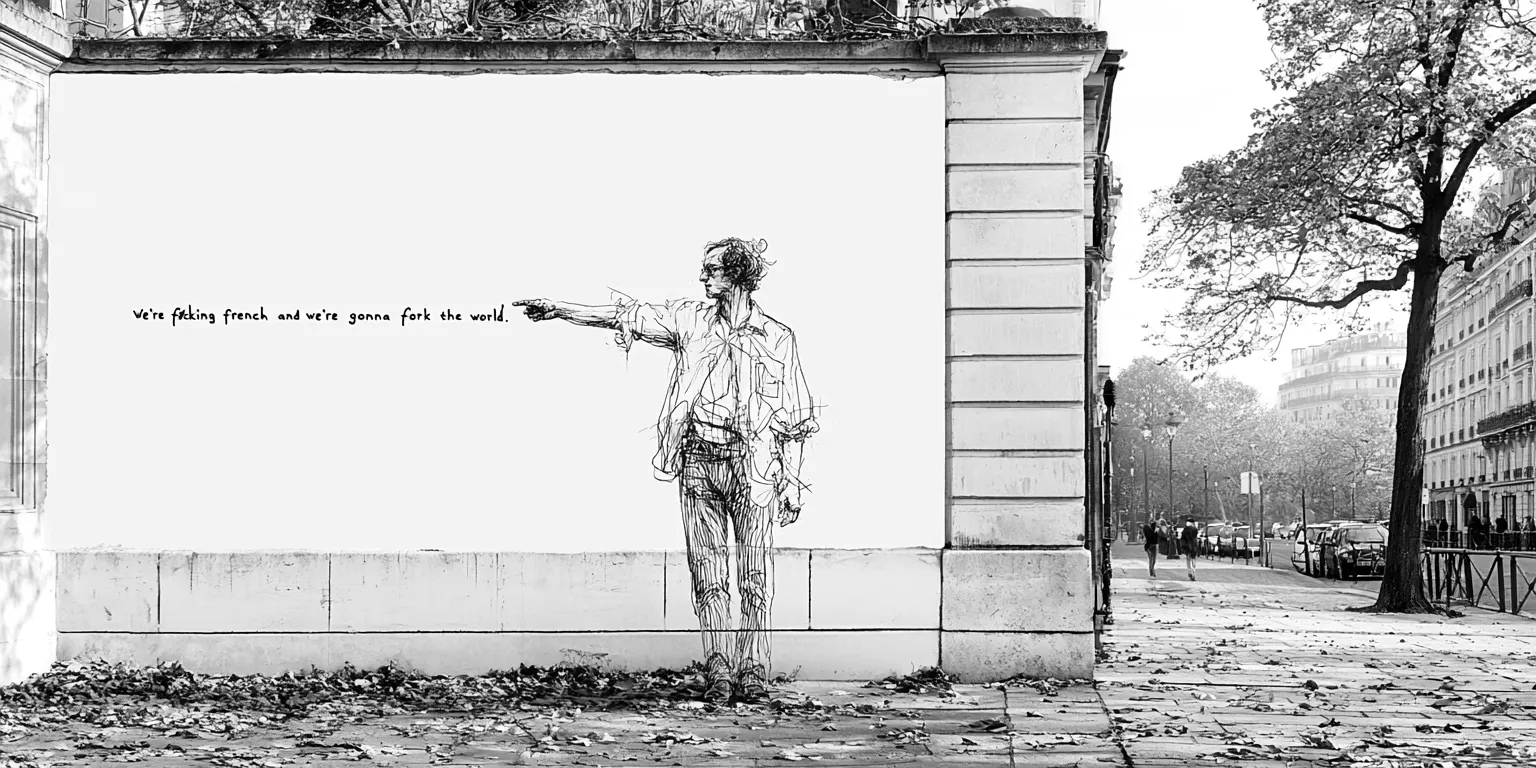
To all my colleagues, friends, circles and networks whom I can feel are deeply stressed and depressed by the circumstances around us, or by the crushing realisation that our societies provoke anxiety and drag us into pessimism, I have only one thing to say: There are backdoors everywhere through the borders of the impossible.
Thank you for reading,
zôÖma
Samouraï Coop
samourai.coop
To go further: